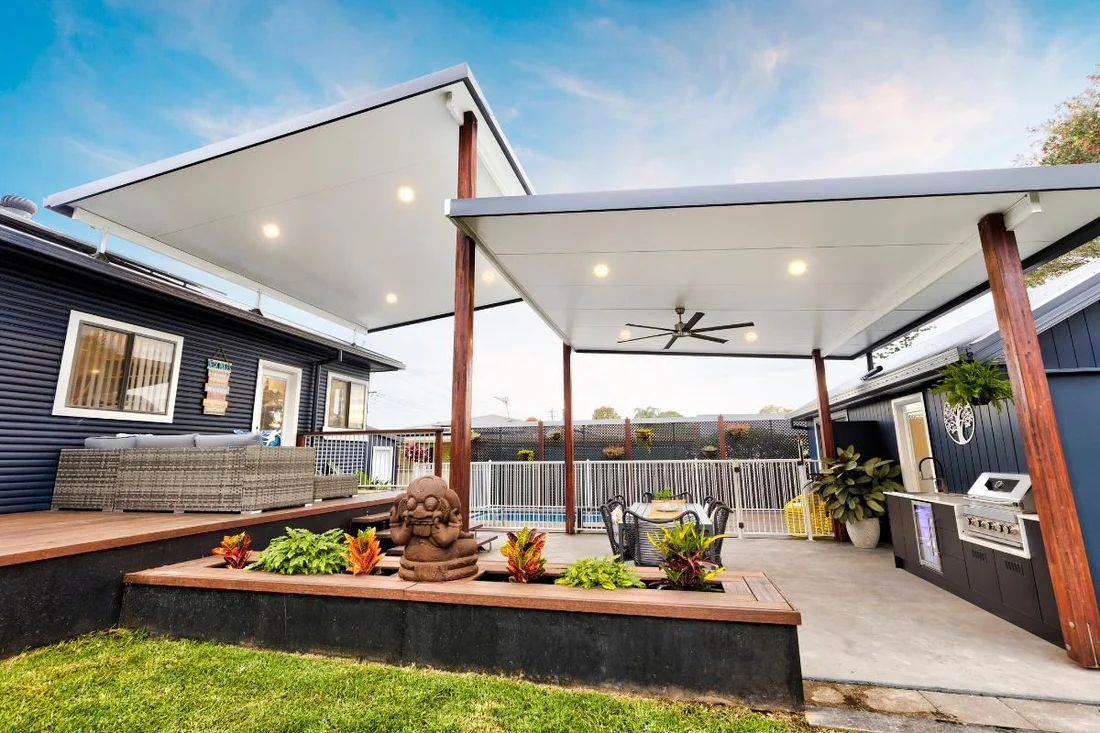
In Australia, people often say pergola when they mean a wide range of outdoor structures, from open beam shade frames to fully roofed outdoor rooms. A pergola with roof sits toward the fully sheltered end of that spectrum: real overhead cover that changes how you use a patio through rain, harsh sun, and cooler months. This guide focuses on solid and adjustable roof systems that deliver meaningful weather protection, how they differ from classic open pergolas, and what to weigh when choosing between polycarbonate, Colorbond steel, insulated panels, and louvered roofs for Sydney conditions.
Open-Beam Pergolas vs a Pergola With a Real Roof
A traditional pergola can be little more than posts and rafters with gaps that let light and rain through. That can be perfect when you want dappled shade and climbing plants. A pergola with roof, as used in this guide, implies continuous or adjustable coverage that materially changes rain and sun behaviour under the structure.
Terminology overlaps with patio covers and alfresco rooms in marketing language. The practical distinction is performance: does the roof keep your furniture substantially drier during showers, and does it reduce UV exposure in a predictable way? If yes, you are in roofed territory regardless of the word pergola on the brochure.
When Full or Near-Full Coverage Makes the Most Sense
All-weather entertaining is the classic driver. If you want to leave cushions out more often, cook under cover during passing rain, or host without migrating indoors at the first cloud, a real roof wins over open beams.
Full cover also helps protect outdoor kitchens, electronics, and timber furniture from rapid wet-dry cycling. It can reduce maintenance on items that degrade quickly when exposed.
Trade-offs include less open sky, more visual mass, and potentially more planning scrutiny depending on height, footprint, and local rules. Those trade-offs are often acceptable when the space is used frequently as a primary living extension.
Polycarbonate Roofing: Light Transmission and Practical Limits
Polycarbonate sheets can provide shelter while still allowing light through, which is useful when you want weather protection without a cave-like feel. Options range from clearer profiles to more opaque tones that reduce glare.
Acoustic and thermal behaviour differs from insulated panels. Polycarbonate can be noisier under heavy rain than insulated sandwich systems, and it transmits more heat than well-insulated roofs in some orientations. Product selection and detailing matter more than the generic word polycarbonate.
Maintenance includes cleaning to prevent grime build-up that scratches or dulls appearance, and checking fixings and seals on schedules appropriate to your tree cover and wind exposure.
Colorbond Steel Roofs: Durable Australian Outdoor Roofing
Colorbond-style steel roofing is a common Australian choice for durable outdoor cover. It can integrate cleanly with house roof aesthetics and performs predictably when gutters and falls are designed properly.
Rain noise is a consideration under steel. Some homeowners like the sound; others prefer mitigation through insulation, ceiling liners, or choosing another system for heavily used conversation zones.
Colour choice affects heat reflection. Lighter colours are often chosen for comfort in sunny exposures, but design cohesion with the house still matters. Your installer can explain palette options without locking you into trends that date quickly.
Insulated Sandwich Panels: Thermal Comfort and Quieter Rain
Insulated roof panels combine structure, weather skin, and thermal core in one assembly. They are strong candidates when you want a more room-like feel under cover, especially for outdoor dining where temperature stability improves comfort.
They often perform well acoustically in rain compared with thin steel-only solutions, though subjective preferences vary. The main downside is thicker visual bulk and less transparency than polycarbonate.
Louvered Adjustable Roofs: Flexibility Between Open and Closed
Louvered roofs sit between fixed solid roofs and open beams because they can tilt blades for shade and ventilation, then close for rain response depending on product capability. They are popular for premium alfresco upgrades where homeowners want control without committing to a permanently dark ceiling.
They introduce mechanical maintenance and power considerations. Treat them as long-term systems, not only as a pretty sketch.
Light, Heat, and Glare: Choosing Roofs With Eyes on Comfort
Every roof type changes how light enters the patio and adjacent rooms. Translucent options preserve more daylight under cover but can increase glare in certain orientations. Solid roofs create predictable shade but can reduce reflected natural light indoors if poorly positioned.
Thermal comfort is not only about roof colour. Airflow paths, ceiling height, and whether you can open sides with screens or sliding panels matter as much as the roof material itself.
Gutters, Falls, and Drainage Integration
A roof without a coherent gutter strategy is a future maintenance problem. Specify where water goes in peak intensity storms, not only in drizzle. Downpipe discharge must avoid creating slip hazards on paving or washing debris into pools.
If you tie into existing house gutters, do it with professional coordination so you do not overload a line that was never sized for the extra catchment.
Poor drainage detailing is one of the most common failure points for new outdoor roofs.
Compliance and Structural Expectations
Adding a substantial roof can change how authorities view a structure compared with a light open pergola. Requirements vary by project specifics, footprint, height, and site zoning. Do not assume a roofed pergola inherits the same approval pathway as a purely open frame.
Consult your local council and qualified building professionals for project-specific guidance. This article explains design trade-offs, not legal determinations.
How This Overlaps With Patio Covers in Everyday Language
Many homeowners use pergola, patio cover, and alfresco interchangeably. That is fine for conversation, but quotes should be compared on performance specs: sheet type, insulation, wind rating intent, gutter sizes, and structural system.
If two quotes use different words but describe the same sheet product and structural class, they are comparable. If they use the same word but different products, they are not.
Aesthetic Fit: Making a Solid Roof Belong on Your House
Match fascia heights and gutter lines to existing architecture where possible. If the new roof is lower than door heads in a way that feels compressed, adjust early rather than accepting a claustrophobic outcome.
Consider interior views from upstairs windows. A large flat plane visible from above should still look intentional, with tidy ridges and consistent colour logic.
Next Steps: From Concept to a Quote That Reflects Reality
Define your priority order: all-weather use, light level, noise comfort, maintenance tolerance, and budget tier. Then shortlist roof systems that genuinely meet those priorities rather than choosing from photos alone.
Request quotes that specify sheet type, structure class, gutter plan, and inclusions for electrical rough-in if you plan fans or heaters later.
Relative Cost Positioning Without Fixed Dollar Figures
It is more reliable to think in complexity tiers than in round dollar amounts that may not survive first site measurement. Open beam pergolas typically occupy simpler cost bands because they involve fewer weathering layers and less sheet product. Continuous roofs add guttering, flashing discipline, and often more structural steel or engineered timber.
Insulated and motorised systems usually move projects into premium bands because they combine multiple trades, tighter tolerances, and longer-term service expectations. That premium can be worthwhile when the space is used like a second living room for many hours each week.
When comparing quotes, ask each builder to explain what drives their price movement between options A and B. If they cannot explain it in terms of sheet type, structural class, and drainage scope, you do not yet have a comparable quote set.
Key Takeaways
- A pergola with roof prioritises real weather protection, not only filtered sunlight.
- Polycarbonate, Colorbond steel, insulated panels, and louvered roofs each trade off light, heat, noise, and maintenance differently.
- Drainage and gutter integration should be designed for peak storms, not drizzle only.
- Approval and structural expectations may differ from open pergolas; verify with professionals.
- Compare quotes on specifications, not only on whether the word pergola appears in the title.
Frequently Asked Questions
Ready for your pergola project?
Get a free quote and practical guidance from experienced pergola builders serving Sydney.
Get a free quote