A pool pergola is not just a decorative frame around water. In Sydney, it is a practical tool for comfort, supervision, and year-round usability of your pool area. Chlorine and salt water create a harsher microclimate than a typical backyard patio, and splash plus humidity change how materials behave over time. This guide explains how to plan shade and structure that looks resort-quality while standing up to real poolside conditions, without glossing over safety, drainage, or compliance questions that every serious project should address.
Why a Pergola Transforms the Pool Area
Pools are visually strong but functionally exposed. Without defined shade, families tend to use the deck only in narrow weather windows, and furniture fades faster than expected. A well-placed pergola creates a usable outdoor room beside the water where people naturally gather before and after swimming.
The psychological effect matters too. A pergola can signal cabana-style hospitality, making the pool feel like part of a designed landscape rather than a standalone tank. That sense of enclosure improves comfort without necessarily blocking views, especially when roof systems allow adjustable light control.
For households with children, a pergola can also improve supervision geometry by anchoring seating and dining where sight lines across the water remain clear. The structure becomes part of how the space works daily, not only how it photographs.
Poolside Challenges: Chlorine, Salt Spray, Humidity, Splashing, and UV
Chlorinated water and saltwater pools both produce airborne moisture and droplets that land on nearby surfaces. Over seasons, this environment accelerates corrosion on the wrong metals, stresses timber finishes, and can leave mineral deposits on glass and powder-coated surfaces if cleaning routines are casual.
Constant humidity near water also means fasteners and concealed hardware deserve as much attention as visible beams. A bracket that looks fine at installation can degrade faster in a splash zone than in a dry courtyard, especially if coatings are not specified for the exposure level.
UV intensity in Sydney adds another layer. Pool decks are often highly reflective, which can increase perceived heat under partial shade structures. Planning for adjustable shade or well-considered orientation reduces the risk of a pergola that looks good but feels uncomfortably bright at midday.
Splashing is not only a maintenance issue. It influences where you place lighting, outlets, speakers, and any low-level junctions that should stay away from predictable splash paths. Design should assume people will move wet bodies and dripping inflatables through the space.
Treat electrical items, outlets, and lighting near pools as high-risk by default. Use qualified electricians and designs appropriate for wet areas.
Why Aluminium Often Outperforms Timber or Steel Poolside
Timber can look beautiful around water, but it demands disciplined maintenance in splash-adjacent zones. Steel can be excellent when properly coated and detailed, yet coastal and salt-spray contexts require conservative specification. Aluminium pergola systems frequently win pool projects because they resist corrosion in a lighter package and integrate cleanly with modern louvred roofs and screens.
That does not mean aluminium is automatically the only answer. It means the material choice should be driven by exposure, desired roof type, and how much maintenance the household will realistically perform. A timber pergola set back from splash zones with generous eaves-style coverage can still perform well when detailed carefully.
For many Sydney pool decks, aluminium plus quality powder coating and stainless or marine-grade hardware provides a strong balance of clean aesthetics, predictable upkeep, and compatibility with integrated lighting and fans. Always confirm coating systems and hardware grades with your installer rather than assuming catalogue defaults suit your site.
Locations: Beside the Pool, Cabana End, Overhang, and Poolhouse Integration
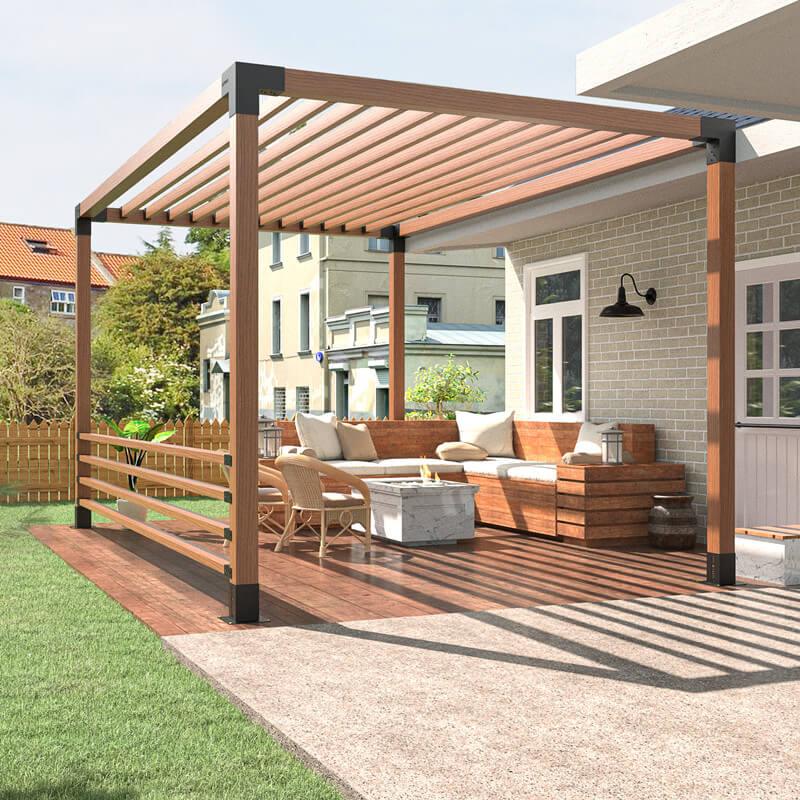
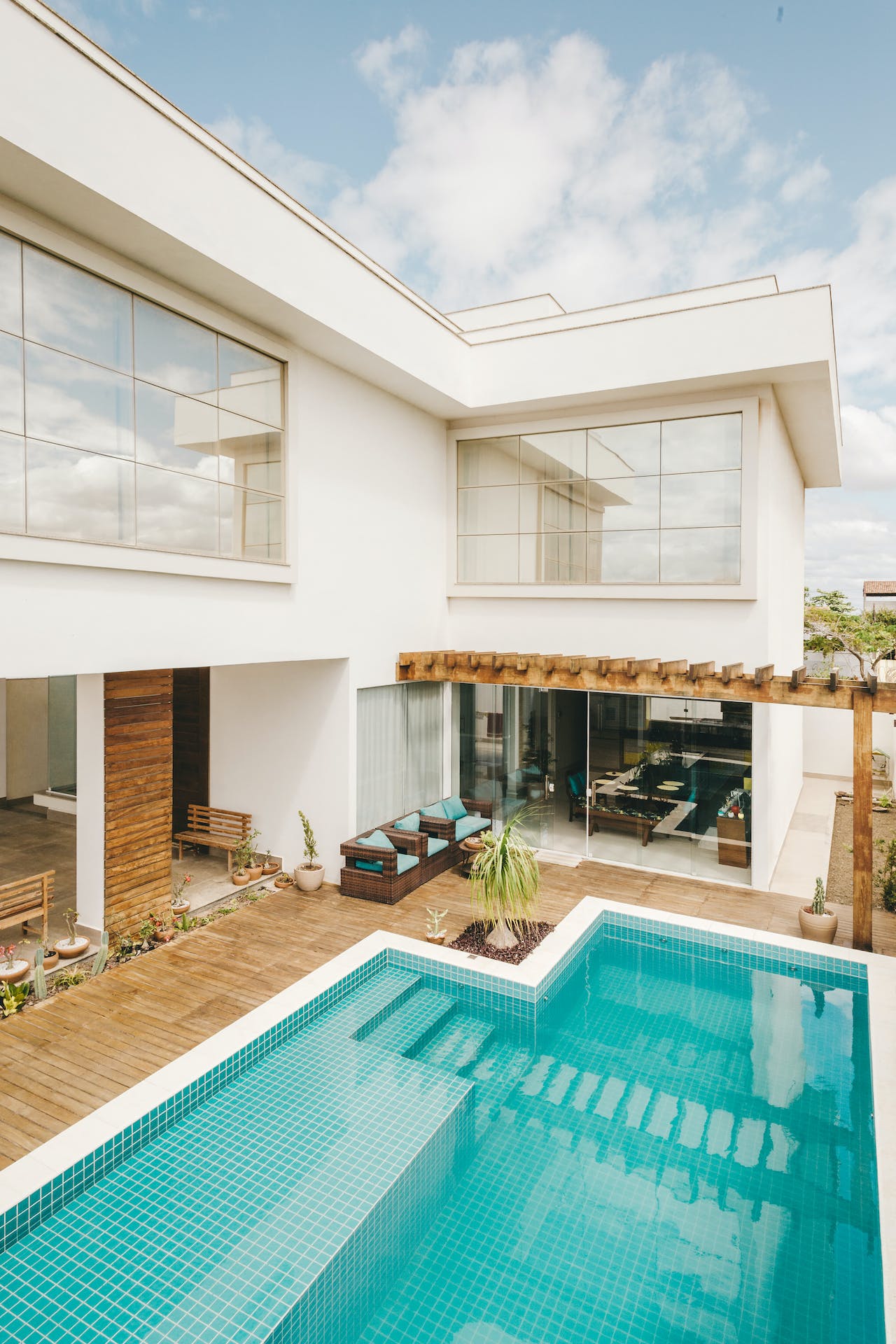
Most residential pool pergolas sit beside the water rather than spanning directly over it. Side placement preserves open sky above the pool for swimmers while still shading seating, dining, and towel zones. It also simplifies structural and compliance discussions compared with large spans that project over water.
A cabana-style arrangement at one end of the pool can concentrate shade, storage, and outdoor shower access into one efficient precinct. This works well when the yard is long and narrow, because it anchors activity at a focal end rather than spreading thin shade across the whole deck.
Where roof lines already include a poolhouse or utility wing, integrating a pergola into that built form can create seamless indoor-outdoor flow. Integration requires careful thought about roof falls, gutters, and how new structure ties into existing weathering lines.
- Beside-pool shade for lounges and dining without spanning water.
- Cabana-end concentration for resort-style entertaining.
- Integrated poolhouse connection for cohesive architecture.
- Offset pergola to preserve solar access to the pool when desired.
Safety: Pool Edge Distances, Slip Resistance, and Electrical Planning
Pool-adjacent layouts should prioritise predictable movement. That means generous circulation around furniture, clear routes to steps and handrails, and thoughtful placement of posts so they do not create trip hazards during busy swim days. Non-slip decking or paving choices matter as much as pergola design when surfaces stay wet.
Lighting should be planned for glare control and safe night use. Downlights aimed across seating rather than across water can reduce harsh reflections. Any cabling or fittings near splash zones should be treated with appropriate caution and installed by licensed professionals.
Distances to the pool edge and barrier continuity are governed by pool safety rules that vary by situation and jurisdiction. Do not rely on general web advice for barrier compliance. Confirm requirements with your local council and a qualified pool certifier or builder familiar with current NSW expectations for your property type.
Style Directions: Resort Cabana, Tropical, Modern Minimalist, Mediterranean
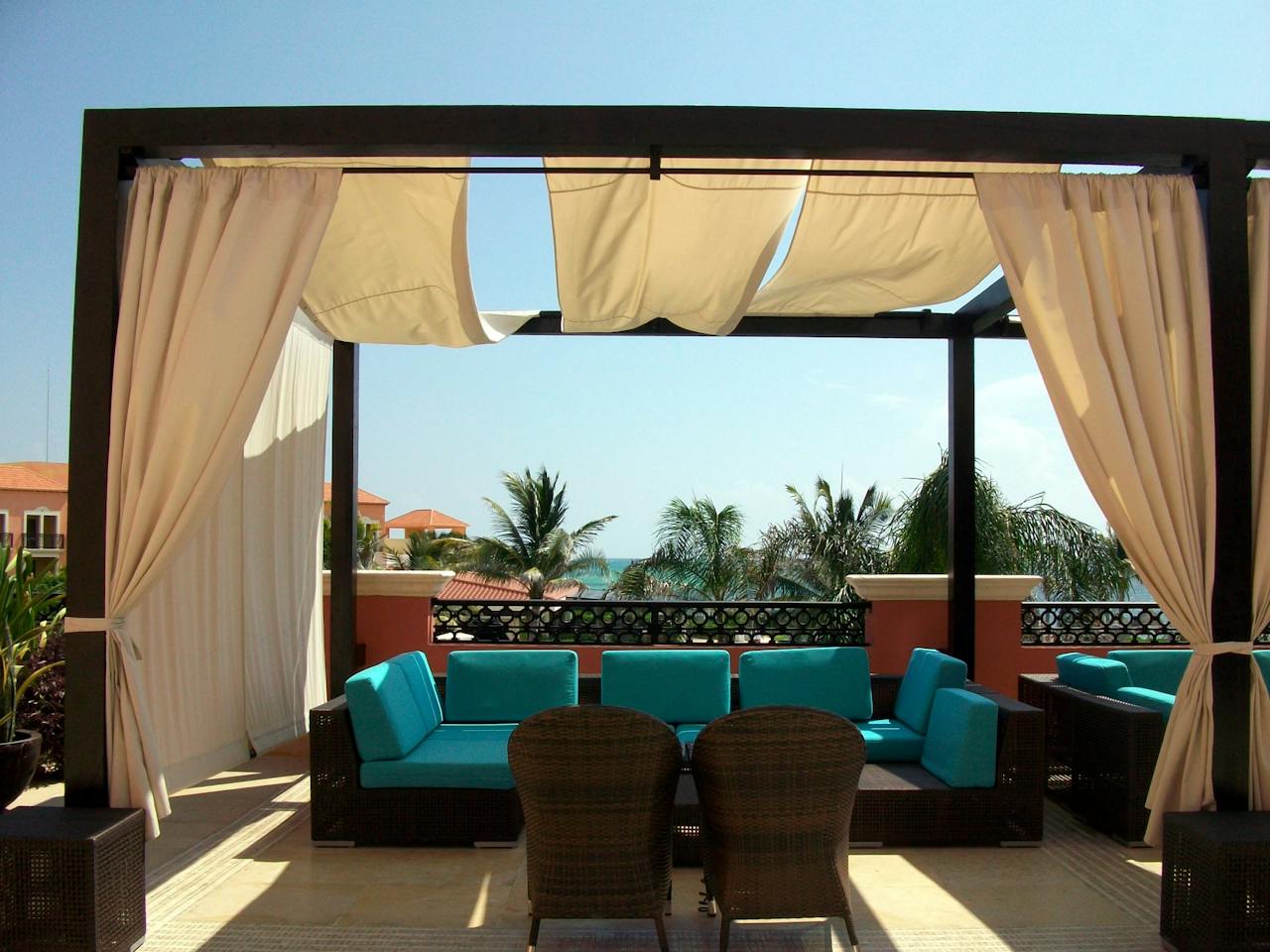
Resort and cabana aesthetics lean on horizontal lines, generous shade, and soft furnishings that feel hospitality-grade. This style pairs well with louvered roofs and integrated screens because the technology reads as contemporary luxury rather than industrial add-on.
Tropical directions emphasise planting, natural textures, and relaxed seating. A pergola here is often part of a layered shade strategy that includes trees and climbers, but remember that plant debris and drip lines interact with pool chemistry and filtration loads.
Modern minimalist pool areas favour restrained palettes, concealed fixings, and strong alignment with house architecture. Mediterranean influences introduce warmer tones, textured paving, and classic proportioning. Each direction can work when materials are chosen for poolside exposure, not only for mood boards.
Ideal Features: Louvred Roofs, Privacy Screens, Lighting, and Outdoor Fans
Louvered or adjustable roof systems help manage both harsh midday sun and the lower-angle heat that bounces off water and paving. They also support better airflow than fully solid roofs in many layouts, which matters when chlorine smell and humidity accumulate under a low canopy.
Privacy screens can reduce visual exposure to neighbours while improving wind comfort. Retractable or fixed options should be selected based on orientation and how much openness you want toward the pool for supervision.
Integrated LED lighting extends usable hours and improves safety when combined with sensible switching zones. Outdoor-rated fans can improve perceived comfort on still humid evenings, but mounting height, blade clearance, and moisture exposure must be assessed professionally.
Drainage: Keeping Pool Water Chemistry and Deck Runoff Under Control
Any roofed structure near a pool should route rainwater deliberately away from the pool edge where possible, and away from areas where people stand in bare feet. Poor drainage can create slippery zones, stain paving, and increase maintenance load on pool filtration if dirty water routinely washes in.
Discuss guttering, downpipe discharge points, and overflow behaviour with your installer during design, not after the frame is up. Integrated systems that hide water paths inside posts can look elegant, but they must be maintainable and sized for intense Sydney storms.
Pool Fencing and Compliance: A Cautious Note for NSW Homeowners
Pool safety barriers are non-negotiable elements of residential pool areas in NSW, and pergolas can interact with barrier lines, climbable zones, and gate clearances depending on placement and height. Rules are detailed and situation-specific.
Before locking in a pergola position, seek guidance from qualified professionals familiar with pool safety standards and local enforcement expectations. A pergola post or low roof edge should never be assumed compliant without review.
This article does not provide legal compliance advice. It highlights that pergola projects near pools should include explicit compliance verification in the project plan, separate from aesthetic decisions.
Consult your local council and qualified pool barrier certifiers or builders for project-specific compliance requirements.
Hardware, Finishes to Favour, and Realistic Poolside Maintenance
Specify corrosion-appropriate fasteners and brackets, especially at post bases and connections that see splash or condensation. Mixed-metal combinations can accelerate galvanic corrosion if not detailed correctly, so hardware packages should be treated as a system.
Avoid finishes that are difficult to clean around salt and sunscreen residue if the pergola sits in a high-touch zone. Smooth powder-coated surfaces with accessible junctions tend to be easier to maintain than intricate profiles that trap grime.
Maintenance should include periodic inspection of coatings, drainage paths, and any moving roof components. Pool chemistry balance also influences corrosion risk indirectly; aggressive water chemistry can increase airborne corrosives in the microclimate around the deck.
Decision Framework: Planning a Pool Pergola You Will Actually Use
Start with how your household uses the pool across seasons, not only summer weekends. If the pergola mainly supports short swim sessions with kids, shade priorities differ from a home that hosts long poolside lunches and evening entertaining.
Next, map sun and wind across a typical day and decide whether you need adjustable control or a simpler fixed roof. Then align materials and hardware grades with splash exposure and coastal context.
Finally, integrate safety, drainage, and compliance checks into the same timeline as design approvals. The best-looking pool pergola is still a failure if it creates compliance rework or unsafe circulation patterns.
When you are ready for pricing, request a tailored quote that includes structure, roof type, drainage intent, and finishing scope. Generic comparisons rarely capture the extra detailing that poolside projects require.
Key Takeaways
- A pool pergola improves comfort, supervision, and everyday usability of the pool deck.
- Chlorine, salt spray, humidity, and UV make material and hardware specification more demanding than typical patios.
- Aluminium systems often suit poolside exposure well, but site-specific detailing still matters.
- Safety, drainage, and pool barrier compliance must be verified with qualified professionals.
- Adjustable roofs, screens, and thoughtful lighting extend usable hours without sacrificing supervision.
Frequently Asked Questions
Ready for your pergola project?
Get a free quote and practical guidance from experienced pergola builders serving Sydney.
Get a free quote