Good pergola design is less about trends and more about proportion, function, and integration. A pergola can look impressive in isolation but still fail in day-to-day use if circulation, shade, scale, and roof logic are not resolved. This guide breaks down how to design a pergola properly, from first measurements to final detailing.
Core Pergola Design Principles
The strongest pergola designs balance proportion, scale, and architectural fit. Proportion means the parts relate well to each other. Scale means the structure suits the house and site size. Integration means the pergola feels like it belongs to the property rather than being appended as a separate object.
When these three principles align, even simple pergolas feel premium and intentional.
How to Measure and Plan Dimensions
Start with use-case dimensions: table footprints, seating clearances, and walk paths. Then layer structural allowances for posts, beams, and roof edges. Avoid designing around a blank rectangle; design around the way people will actually move.
For most homes, practical dimensions outperform oversized statements. Good circulation and shade behavior are usually more valuable than raw area.
- Map furniture and movement paths first.
- Confirm setbacks and boundary constraints.
- Set width/depth based on activity zones.
- Test headroom and roof line against existing house geometry.
Flow and Connection to Adjacent Zones
Pergolas work best as connectors between indoor and outdoor life. Aligning entries, thresholds, and pathways can turn separate spaces into one coherent living experience.
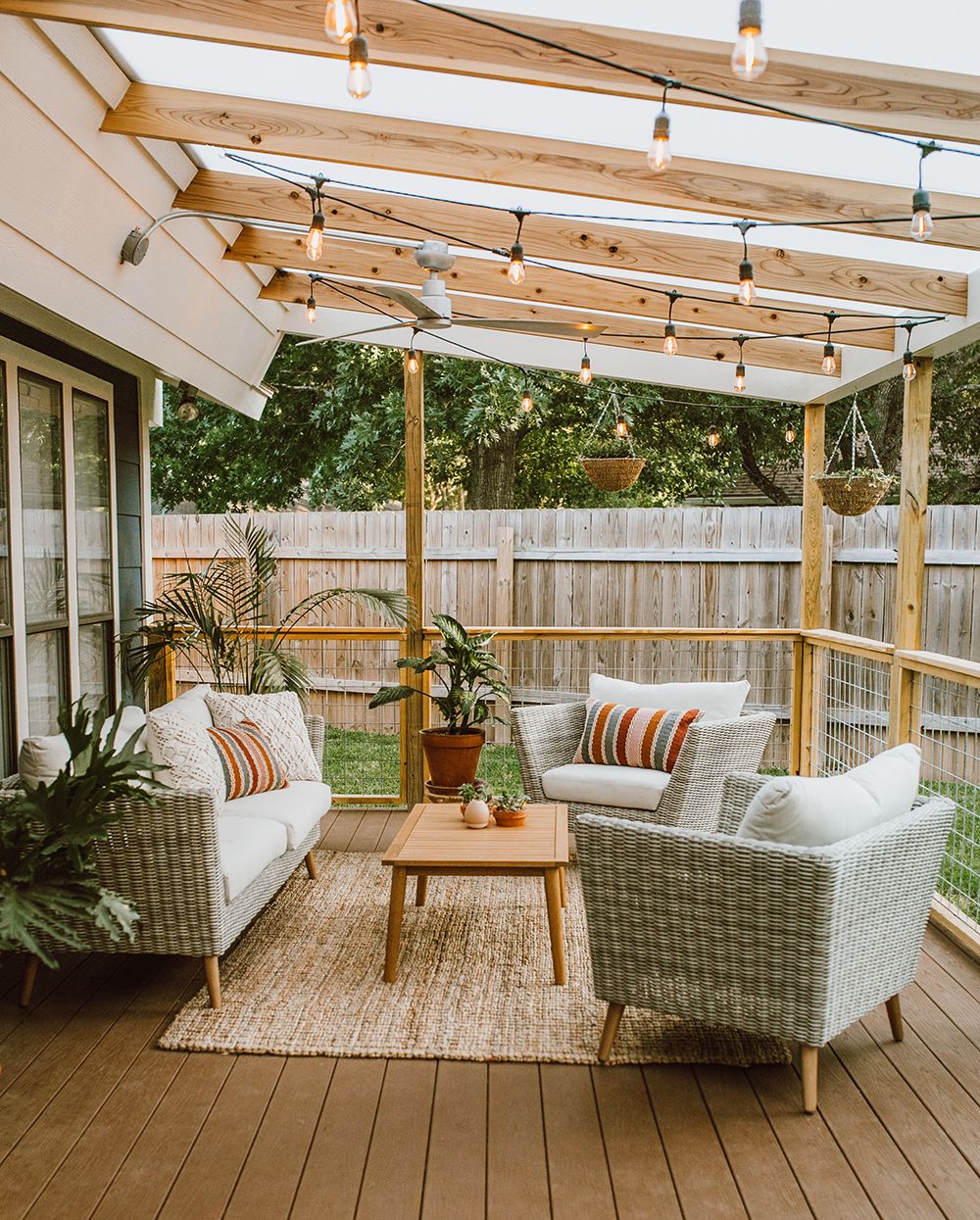
If your pergola includes dining and lounge functions, define each zone without creating barriers. Strategic lighting and material transitions can help organize space cleanly.
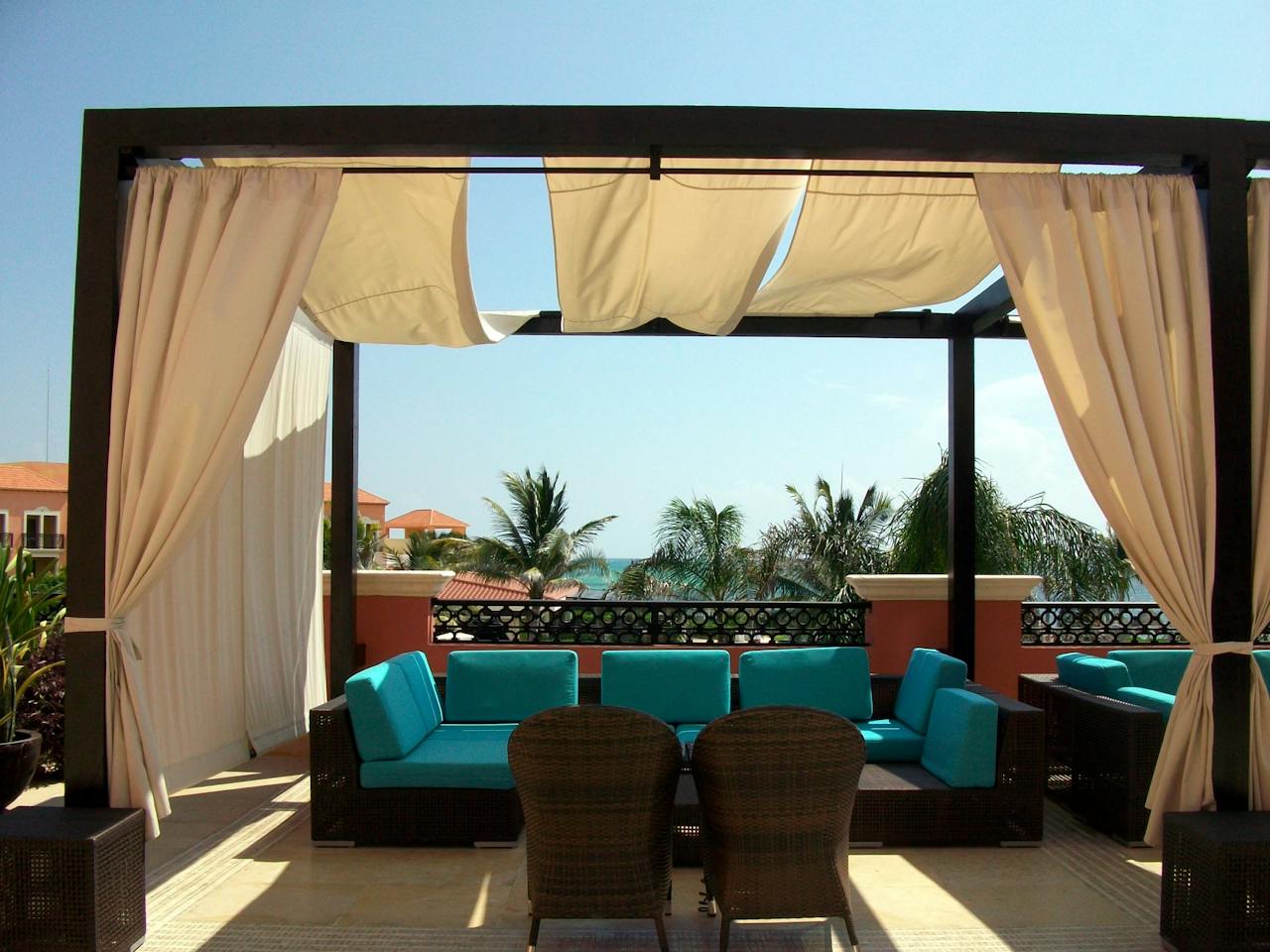
Choosing Height, Width, and Depth
Height affects openness and comfort. Width and depth affect furniture usability and structure rhythm. Overly low builds feel compressed; overly high builds can feel disconnected unless balanced by strong horizontal lines.
A useful rule is to match pergola massing to adjacent facade proportions so the new structure complements existing architecture.
Match Style to House Architecture
Contemporary homes usually suit cleaner lines and restrained palettes. Traditional homes often respond better to warmer detailing and softer material transitions. Hybrid houses can carry mixed language if one visual hierarchy stays dominant.
Style matching is not about copying every detail; it is about maintaining coherence in form, color, and rhythm.
Roof Design: Flat vs Sloped, Covered vs Open
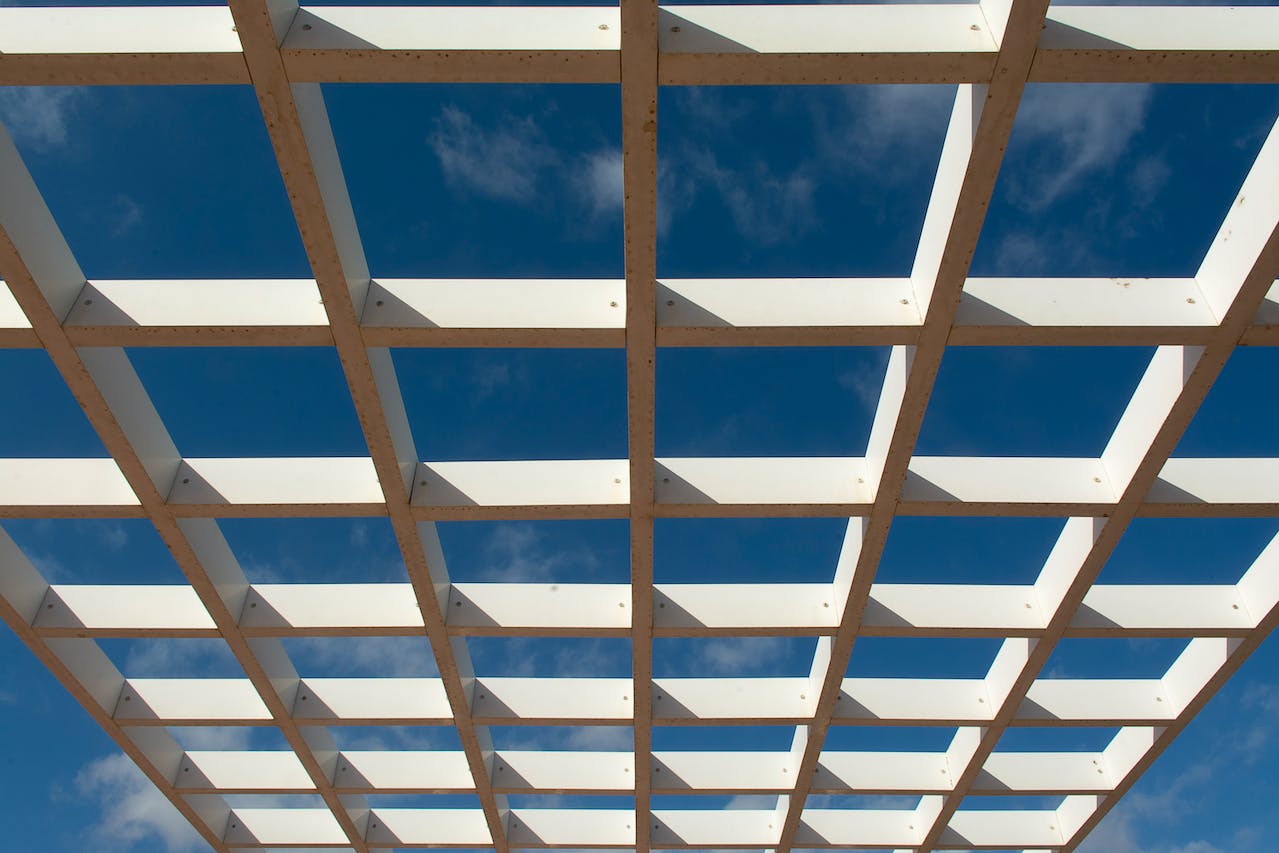
Roof direction affects drainage, weather performance, and visual character. Flat or low-pitch options can suit modern facades. Sloped roofs may improve runoff behavior and can better align with pitched homes.
Open systems preserve brightness and airflow. Covered systems improve all-weather use. The right choice depends on how often the space will be used during harsher weather.
Treat roof choice as a comfort decision first and an aesthetic decision second.
Detailing: Posts, Beams, Rafters, and Brackets
Small detailing decisions have major visual impact. Post thickness, beam depth, and bracket expression should be coordinated, not selected independently. Consistent detailing usually makes a pergola look more expensive and better resolved.
Hardware should support both structure and style. Visible bracket choices can become a design feature when selected intentionally.
- Keep structural language consistent.
- Avoid mixing too many profile shapes.
- Use bracket styles aligned to overall design intent.
- Confirm detailing supports maintenance access.
Common Pergola Design Mistakes
Common errors include oversizing without planning circulation, mismatching style to house architecture, underestimating sun direction, and choosing roof types that do not match real usage patterns.
Another frequent issue is leaving key detailing decisions too late, which can produce visual inconsistencies and retrofit costs.
Before final approval, review layout in plan and elevation together to catch proportion and connection issues early.
Key Takeaways
- Strong pergola design is driven by proportion, scale, and integration.
- Measure for real use cases, not just available footprint.
- Roof and detailing decisions shape long-term comfort and quality.
- Architecture matching improves visual value without adding complexity.
- Most costly mistakes come from sequencing decisions in the wrong order.
Frequently Asked Questions
Ready for your pergola project?
Get a free quote and practical guidance from experienced pergola builders serving Sydney.
Get a free quote